
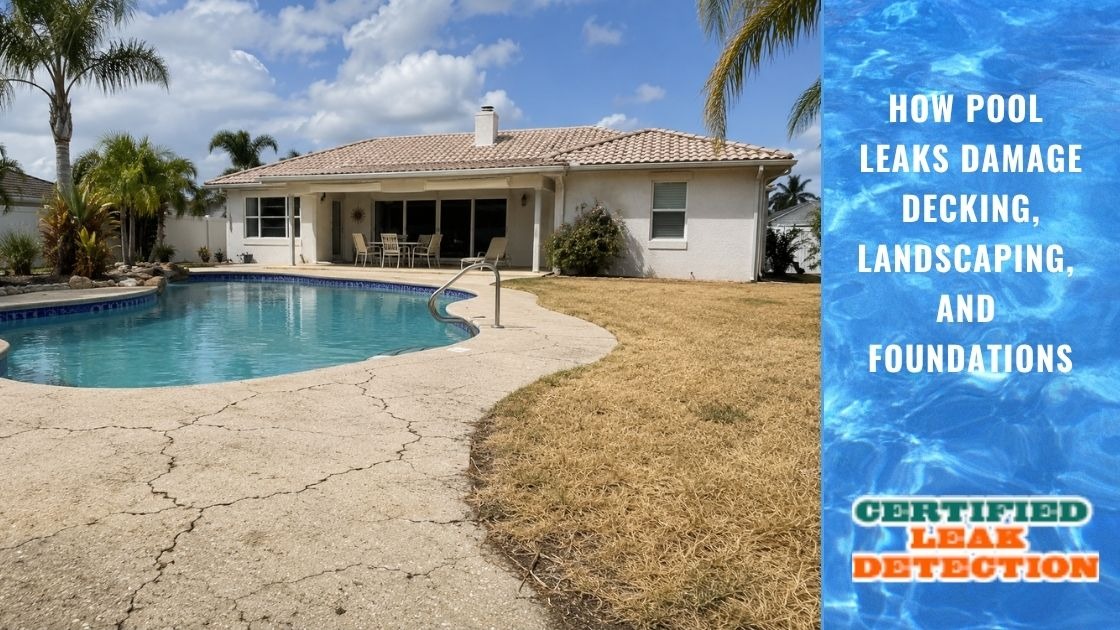
A swimming pool leak that goes undetected can ultimately damage far more than the pool itself. It’s a hidden threat that can quietly damage your entire outdoor environment — eventually working its way to your home’s foundation. While water loss is often the first noticeable symptom, the real problems typically occur beneath the surface, where escaping water begins to erode soil, weaken structures, and destabilize surrounding areas.
Understanding how pool leaks affect decking, landscaping, and foundations can help homeowners take action before minor issues turn into costly repairs.
How Pool Leaks Damage Decking
Pool decking is built to handle occasional splashes and weather exposure — but constant underground water from a leak is far more destructive.
When water seeps beneath concrete or pavers, it gradually washes away the supporting soil. This process creates voids under the surface, leading to:
- Cracked or shifting concrete slabs
- Uneven or sunken decking
- Loose or displaced pavers
- Trip hazards and safety concerns
As the soil erodes, the deck loses its structural support. Over time, sections may sink or separate, especially in areas where soil becomes oversaturated and unstable. In some cases, even small cracks in decking can allow water to penetrate deeper, accelerating damage and worsening structural instability.
How Pool Leaks Damage Landscaping
Landscaping is often one of the first areas to show signs of a hidden pool leak. However, the signs can be misleading, initially causing homeowners to assume that other reasons are responsible for problems with their soil or grass.
Excess water from a leak can:
- Saturate soil and drown plant roots
- Cause grass to yellow or develop fungal issues
- Wash away mulch and topsoil
- Create persistent muddy or soggy areas
Over time, this constant moisture can alter the grading of your yard, leading to low spots, erosion, or even small sinkholes. In fact, continuous underground water flow can destabilize soil to the point where visible ground collapse occurs in extreme cases. What appears to be a simple landscaping issue could be a sign of deeper structural concerns.
How Pool Leaks Damage Foundations
One of the most serious consequences of a pool leak is damage to your home’s foundation. As water escapes and accumulates in the surrounding soil, it changes the soil’s stability. Depending on the soil type, this can cause it to:
- Expand when saturated
- Contract when it dries out
- Shift unevenly beneath structures
This cycle of expansion and contraction can lead to:
- Cracks in foundations or pool shells
- Uneven settling of the home
- Misaligned doors and windows
- Structural instability over time
Leaks in underground plumbing are especially dangerous because they can allow water to collect near the home for long periods, gradually weakening the foundation and causing it to shift. Florida’s sandy soil makes this risk even higher. Water can easily wash away loose soil, creating voids beneath foundations that lead to sinking or cracking.
Why Damage Often Goes Unnoticed
One of the biggest challenges with pool leaks is that the damage develops slowly and out of sight. As mentioned earlier, homeowners typically attribute issues caused by a pool leak to other reasons, such as the following:
Poor drainage — Central Florida’s heavy summer rains overwhelm the soil in many yards, leading to poor drainage as the typical suspect. Discovering the true cause can be delayed as homeowners first try to fix it through re-grading the yard, installing a French drain, etc.
Normal settling — In the case of cracks and shifting, many people believe that it’s normal for older properties to “settle.” This assumption is risky regardless of the cause, but when it’s a pool leak, damage will continue.
Aging materials — Loose tiles, pavers, cracked joints and deteriorating surfaces can be common signs of an aging pool deck.
Wear-and-tear related to weather and time — Florida’s intense sunlight and summer heat (as well as humidity), torrential summer afternoon rainfalls, hurricanes and tropical storms all take a toll on pool decks. Also as mentioned earlier, they don’t do yards any favor, with homeowners experiencing soil runoff and drainage issues. Blaming such problems on our climate often comes well before investigating the possibility of a pool leak.
The Take-Home Message
A pool leak doesn’t stay contained — it spreads its impact to everything around it. From unstable decking to damaged landscaping and dangerously compromised foundations, the effects can be extensive and expensive if left unaddressed. Our blog post — “Why You Shouldn’t Ignore a Pool Leak” — covers this topic in greater detail.
The good news? Early detection and professional leak identification can stop the damage before it escalates — saving your pool, your property, and your budget. Now that you know, put a pool leak on your list of possibilities to eliminate if you’re dealing with surface, structural, or landscaping issues you’ve been attributing to other causes. Then, call us! Certified Leak Detection uses technology and techniques we have developed over 20 years in business — such as non-invasive ultrasonic detection technology.
In addition to accurate detection of pool leaks, we provide industry-leading leak detection for spas and hot tubs, as well as slabs and foundations. Serving areas throughout Central Florida — including Orlando, Longwood, Lake Mary, Sanford, Kissimmee, Clermont, and Winter Springs — we are ready to answer your call. Contact us for quick, reliable service!