
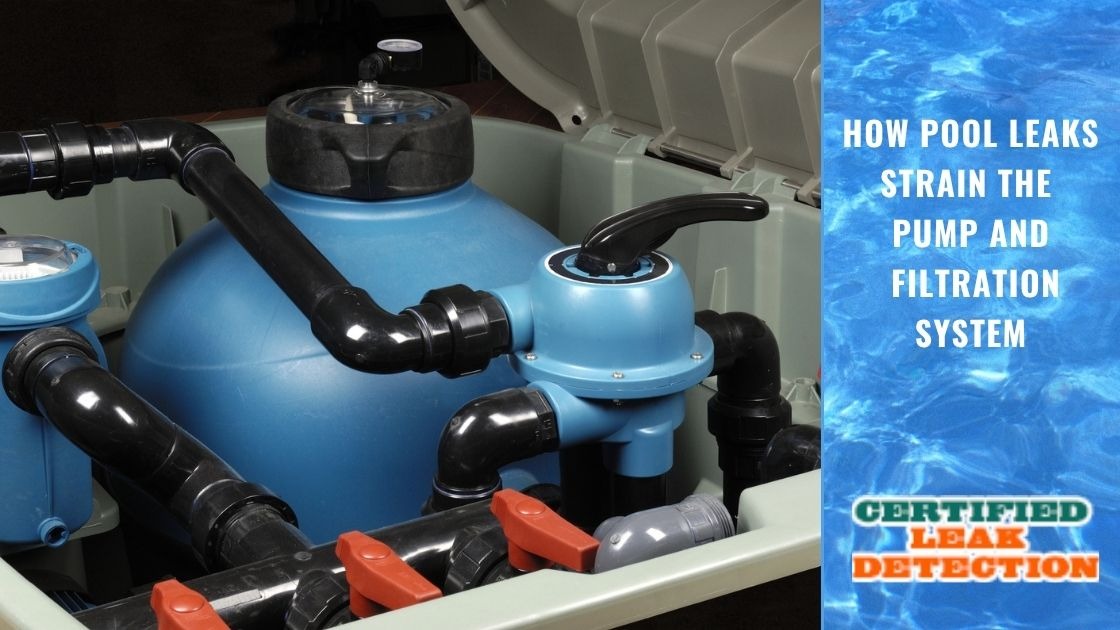
A pool leak doesn’t just waste water — it can quietly put significant stress on your pool’s most important equipment. Your pump and filtration system are designed to operate under stable conditions, but when a leak disrupts that balance, the result can be reduced efficiency, higher energy costs and even premature equipment failure.
Here’s how pool leaks strain your pump and filtration system — and why early detection is so important.
The Role of Your Pool’s Circulation System
The pool pump and filter work together. The pump serves as the heart of a pool’s circulation system by using an electric motor to spin an impeller inside a housing, creating suction that draws water from the pool (via skimmers/drains). The water passes through a strainer basket to remove large debris, is forced through a filter for cleaning, and finally pushes back into the pool.
This system depends on a consistent water level and steady flow. When a leak occurs, that consistency is lost.
Key Ways Leaks Strain the System
A pool leak strains the pump and filtration system by causing low water levels (resulting in dry-running, overheating and lost prime) or air ingestion (causing cavitation and inconsistent pressure), which forces the pump to work harder and can burn out the motor. This inefficiency leads to poor circulation and increased energy costs.
Key strains on the system include the following:
Dry running and overheating — If a leak drops the water level below the skimmer, the pump runs dry. This is also known as pump starvation. Without water to lubricate and cool the impellers, the pump overheats, causing damage to the plastic housing and motor seals — as well as to the motor itself.
Suction-side air leaks — Many pool leaks occur on the suction side of the plumbing (before the pump), such as near the skimmer or underground lines. Cracks in pipes or faulty, worn-out O-rings and gaskets (such as in the pump lid or valves) allow air to enter the system. The pump works harder to move air than water, reducing efficiency and leading to premature failure.
Pressure-side leaks — The pressure line is the side that pushes the water out. As the name implies, this side is constantly under pressure. This pressure allows water to escape even the smallest of crevices. A crack in the PVC line or a loose fitting can cause a pool pump leak.
Reduced filtration efficiency — When air is continuously drawn into the system, the filter cannot operate correctly. This can lead to increased pressure in the filter tank or a complete loss of flow, creating murky water and leaving the pump at risk of burning out.
Chemical damage — Leaks can cause water levels to drop, leading to concentrated sanitizers or, ironically, unbalanced, low-chlorine water that causes algae growth, forcing the pump to run longer and harder. Moreover, leaks require frequent refilling, which dilutes your pool’s chemicals — which makes it harder to maintain proper water balance.
Unbalanced water can:
- Increase corrosion in equipment
- Damage internal components of pumps and filters
- Reduce overall system efficiency
The combination of mechanical strain and chemical imbalance accelerates equipment wear.
Increased run time and energy costs — When circulation becomes inconsistent due to a leak, homeowners often compensate by running the pump longer to keep the water clean.
This leads to:
- Higher electricity bills
- Increased wear and tear
- Reduced equipment lifespan
A small leak can quietly turn into a major operational expense.
How to Identify a Leak-Induced Strain
Air bubbles — If you see consistent air bubbles in the pump strainer basket — which is visible through the lid — you have a suction leak.
Reduced pressure gauge readings — Low pressure on the filter gauge indicates the pump isn’t pulling enough water, typically because it’s pulling air instead.
Noise while running — If your pump is producing strange sounds — such as grinding and whining, or is excessively loud — it is often a sign of damage caused by running dry.
Wet spots around equipment — Inspect the pump, shaft seal and PVC joints for water residue, indicating the leak is at the equipment pad.
The Take-Home Message
Your pool pump and filtration system are the heart of your pool. When a leak disrupts their operation, the effects ripple through every aspect of pool maintenance. If you notice air bubbles, pressure changes, frequent priming issues, or unexplained increases in energy costs, it’s time to investigate a possible leak. Read our blog post — “Does Your Pool Pump Have a Leak?” — which covers this topic in greater detail. Then, call us! The longer you delay detection and repair of a pool leak, the greater risk of extensive — and expensive — damage to your pool’s components and structure.
Certified Leak Detection uses technology and techniques we have developed over 20 years in business. In addition to quick detection of pool leaks, we provide industry-leading leak detection for spas and hot tubs, as well as slabs and foundations. Serving areas throughout Central Florida — including Orlando, Longwood, Lake Mary, Sanford, Kissimmee, Clermont and Winter Springs — our team is ready to answer your call. Contact us for quick, reliable service!