
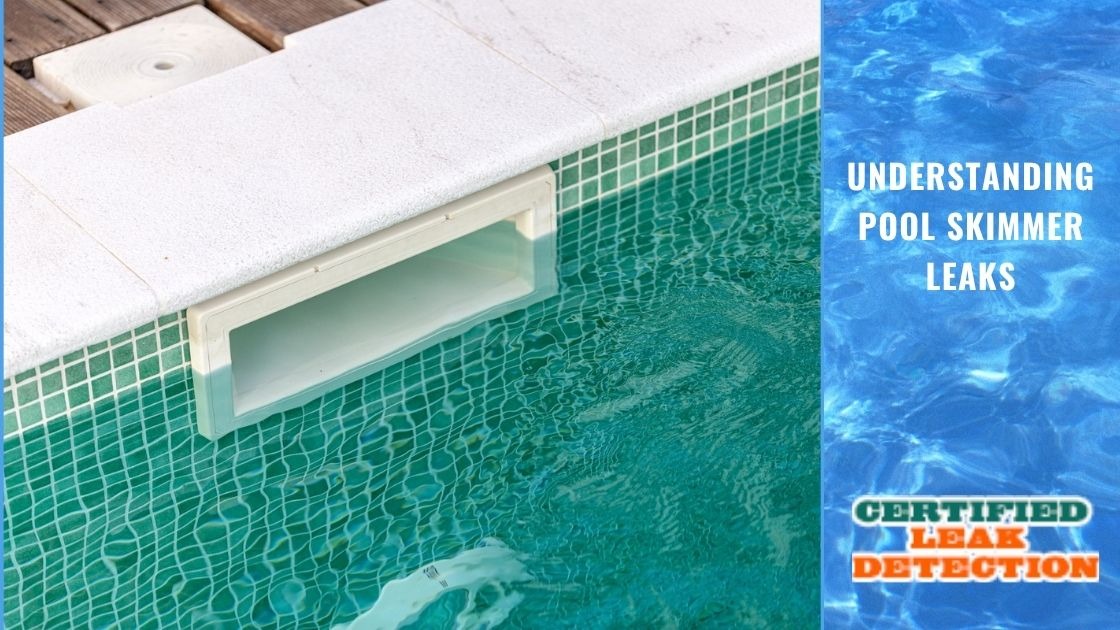
 Your pool’s skimmer plays a critical role in keeping the water clean by collecting leaves, insects, and other floating debris before they sink. While skimmers are designed to withstand years of use, they can also become one of the most common sources of swimming pool leaks.
Because skimmer leaks often develop gradually, they may go unnoticed until homeowners begin adding water more frequently or discover unexplained wet areas around the pool. Understanding how skimmer leaks occur — and recognizing the warning signs — can help prevent more extensive damage and costly repairs.
What is a Pool Skimmer, and How Can it Develop Leaks?
A pool skimmer is the rectangular opening located along the side of your pool, typically near the waterline. As the pool pump circulates water, the skimmer draws in surface water, trapping leaves and debris in a basket before the water continues through the filtration system. Some skimmers have doors over their front that open and close according to the water level and movement. When the pump is turned off, these doors close so that the collected debris in the skimmer basket doesn’t float back into the pool.
The skimmer is connected to underground plumbing and sealed into the pool structure, making it a potential location for several different types of leaks — as they are subject to structural shifting, material expansion mismatches, and chemical wear. Our blog post — “Is Your Pool Skimmer Leaking?” — covers this aspect of skimmer leaks in greater detail.
The Main Reasons for Skimmer Leaks
Pool skimmer leaks don’t happen overnight. Most are slow to develop. The following are the most common reasons:
Structural movement — One of the most common causes is movement between the skimmer housing and the surrounding pool shell. As soil naturally expands and contracts due to moisture changes and temperature fluctuations (more common in regions with harsh winters), small gaps or cracks can develop where the skimmer meets the pool wall. This type of separation is especially common in older pools and in regions with sandy or shifting soils — such as Florida.
Cracked skimmer housing — Skimmers are typically made from durable plastic materials, but years of sun exposure, aging, and ground movement can eventually lead to cracks. Even a small crack may allow water to escape continuously behind the pool wall.
Deteriorated sealant — The joint between the skimmer and the pool shell is sealed during construction. Over time, this sealant may deteriorate due to the following factors:
- Age
- UV radiation
- Water exposure
- Ground movement
- Normal wear-and-tear
As the seal weakens, water can slowly seep through the opening.
Plumbing leaks — Sometimes the skimmer itself isn’t leaking at all. Instead, the underground pipe connected to the skimmer may develop:
- Cracks
- Loose fittings
- Damaged joints
- Tree root intrusion
Because these leaks occur underground, they often require specialized equipment to locate accurately.
Signs Your Pool May Have a Skimmer Leak
The most obvious sign of a pool skimmer leak is if the water level drops below the skimmer and stays there. However, several other symptoms commonly point to a skimmer problem. Watch for the following:
- Visible cracks around the skimmer
- Loose or separating caulking
- Wet soil or soggy landscaping near the skimmer
- Air bubbles coming from the return jets
- Difficulty keeping the pump primed
- Frequent need to refill the pool
Why Skimmer Leaks Shouldn’t Be Ignored
A leaking skimmer may seem like a minor issue, but continuous water loss can lead to much larger problems. Over time, escaping water may:
- Wash away soil supporting the pool deck
- Cause concrete or pavers to settle
- Damage landscaping
- Increase water bills
- Place additional strain on the pool pump
- Reduce filtration efficiency
- Contribute to structural movement around the pool
The longer a leak continues, the greater the potential for expensive repairs.
Can Homeowners Repair a Skimmer Leak?
Minor cracks or deteriorated sealant near the waterline can sometimes be temporarily repaired using underwater pool epoxy or specialized sealants. However, these products only work if the true source of the leak has been correctly identified. Many homeowners mistakenly repair visible cracks only to discover that the actual leak was in the underground plumbing or behind the skimmer housing. Professional leak detection helps determine the exact location before repairs begin, preventing unnecessary work and repeated repairs.
If you suspect a pool leak of any kind, there’s no reason to delay. Call us! The sooner the source of the leak is identified, the easier — and less expensive — it is to protect your pool, equipment, and property from further damage.
Certified Leak Detection uses technology and techniques we have developed over 20 years in business. In addition to quick detection of residential and commercial pool leaks, we provide industry-leading leak detection for spas and hot tubs, as well as slabs and foundations. Serving areas throughout Central Florida — including Orlando, Longwood, Lake Mary, Sanford, Kissimmee, Clermont and Winter Springs — our team is ready to answer your call. Contact us for quick, reliable service!