
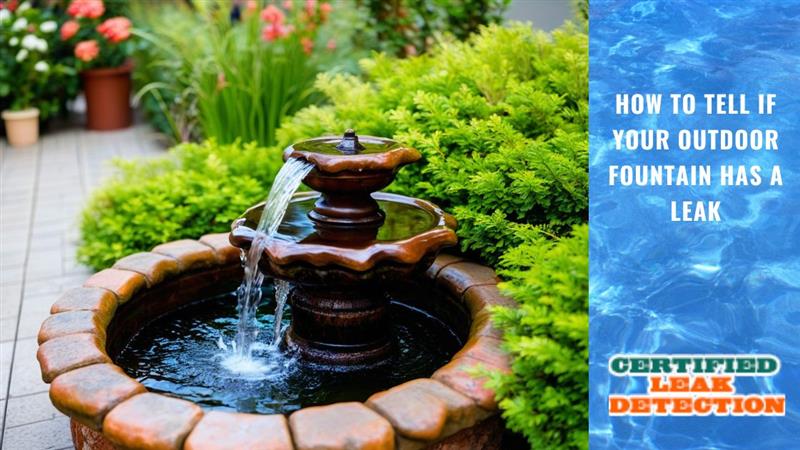
An outdoor water fountain adds an extra touch of beauty and tranquility to any yard. Unfortunately, that tranquility can be shattered if it starts to leak! As we Central Floridians have ample opportunity to enjoy our yard and garden during most of the year, you should be able to notice a fountain leak soon after it occurs – which means it can be repaired before further damage occurs, or your suddenly higher-than-usual water bill becomes the new normal. Here’s what to look for, how to confirm a leak and what to do about it!
The Most Common Signs of a Fountain Leak
- Your fountain is losing water faster than normal – Even accounting for evaporation, if you need to refill your fountain more frequently than you’re accustomed to doing, a leak may be the cause.
- Wet or soft ground around the fountain – Water collects on the ground near the base of the fountain even when it hasn’t rained, forming puddles that don’t dry quickly. This is because water leaks from the fountain’s basin, seams, or plumbing fittings and accumulates on the surface below.
- Visible cracks in the fountain bowl or basin – Look for noticeable fractures in stone, concrete, or resin fountains. For metal fountains, look for discoloration from water stains, rust or corrosion. Cracks or damage provide a direct path for water to escape. Even small cracks can cause significant leaks over time.
- Low water pressure or weak water flow – The fountain’s streams or jets of water are weaker than usual, sputtering, or inconsistent. A leak reduces the amount of water available for the pump, affecting circulation.
- Increased algae or dirt buildup – Leaking water creates damp areas conducive to mold and algae growth. This can appear as green or black algae, or white chalky deposits near the fountain or on the surrounding ground. A dirt buildup around an outdoor fountain base often means a leak because escaping water mixes with soil, creating mud, or carries dirt, algae and minerals to the surface, leading to dark, wet spots or green/mossy growth – even if the water level drops faster than normal evaporation, indicating water is escaping the system. Moreover, this constant dampness attracts grime and encourages unwanted plant growth, making the area look dirty or muddy.
- Air bubbles in the fountain stream – A large number of air bubbles in a fountain stream can be a strong indication of an air leak (suction leak) in the pump system, or that the water level is too low. Lowered water levels can affect pump function and result in unusual flow patterns.
- The fountain pump is running louder than usual – If a fountain pump’s seals are going bad, cracked, or dried out, they can form leaks. Air leaks in inlet plumbing can create very loud noises. If you hear hissing, gurgling, or dripping sounds that weren’t there before, water escaping through cracks or faulty plumbing could be the cause.
How to Confirm a Fountain Leak
If you suspect that your outdoor fountain is losing water due to a leak, there are two easy DIY tests you can conduct. To rule out the possibility of a false result, conduct after a few days without rain, and turn off the irrigation system.
Dye Test
This straightforward test is effective for detecting large leaks, but may not offer conclusive evidence in the case of very small, slow leaks.
- Turn off the pump.
- If necessary, add water to cover the suspected leak area; let the water settle completely.
- Add several drops of leak detection dye or food coloring. Food coloring works well for a small fountain.
- Watch for the dye being pulled into a crack or seam.
Water Level Mark Test
This test helps you compare water loss from evaporation versus leakage.
- Fill the fountain to its normal level.
- Mark the waterline with tape or a grease pencil.
- Turn the fountain off for 24 hours.
- Check the drop in water level.
If the water level drops significantly, there is a leak in the fountain’s basin. If the water level drops only when the fountain is on, there is a leak in the plumbing or pump system.
If the base of your fountain leaks without a visible crack, Serenity Health & Home Décor advises to turn off the pump and let the fountain sit for one week. If there is a crack, this should cause it to appear white.
What to Do if You Detect a Leak
Many fountain leaks – especially in the fountain’s bowl – can be repaired by the homeowner. The key is finding the leak and applying the right durable, water-resistant product. However, attempting to repair it yourself without confirmation by a water fountain installation specialist or leak detection specialist could make the problem worse. In addition, the issue could be a leak in the piping – which requires repair by a professional.
The Take-Home Message
An outdoor water fountain adds a magical ambiance to your yard, providing a center of calm that encourages you to relax and connect with nature. Knowing how to recognize signs of a possible leak will help keep it that way!
Moreover, regular maintenance of your fountain will ensure it’s always in top condition. Our blog post – “What You Need to Know About Outdoor Water Fountains” – covers all of the essentials.
Although we’ve provided two basic DIY leak detection methods, the source of the leak may not become visible. If you suspect a leak – or confirm that your fountain is leaking, but can’t locate the source – call Certified Leak Detection. We are experienced in leak detection for swimming pools, spas, hot tubs and fountains. Serving areas throughout Central Florida – including Orlando, Longwood, Lake Mary, Sanford, Kissimmee, Clermont and Winter Springs – we are ready to help keep your fountain a source of beauty and enjoyment. Contact us for quick, reliable service.