
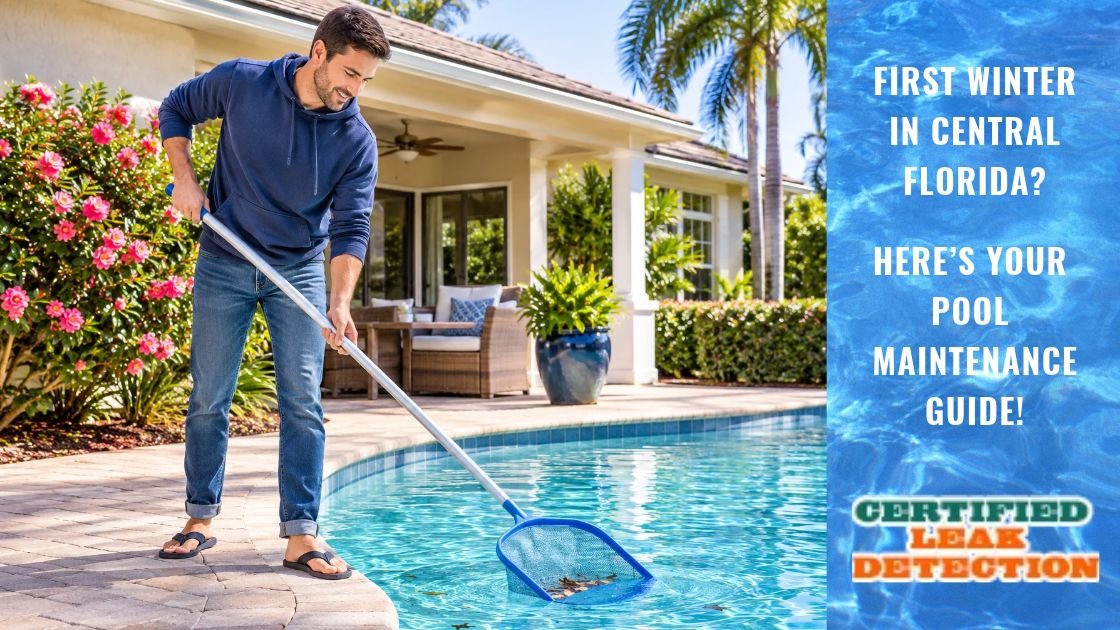
 Congratulations on your first winter in The Sunshine State! If you’ve recently relocated from a state that has four distinct seasons, you’re probably enjoying the milder temperatures, abundant sunshine, and lack of snow and ice. And if your new home has a swimming pool, you’ve probably been spending a lot of time enjoying that, as well!
However, you may be wondering what to do with your pool when temperatures drop. Should you close it for the season? Drain it? Cover it? And how much maintenance does it really need when nobody is swimming?
The good news is that winter pool care in Central Florida is considerably easier than it is in colder climates. However, there are a few important things you need to know to keep your pool clean, safe, and in excellent condition until warmer weather returns.
Let’s take a look at three important aspects of winter pool care for new Central Florida residents!
Chapter One: Don’t Close Your Pool!
If you’ve spent previous winters in a state where temperatures routinely drop below freezing, you’re probably familiar with the annual ritual of closing your swimming pool. This typically involves lowering the water level, winterizing the plumbing and equipment, adding special chemicals, and covering the pool until spring.
Fortunately, you can forget about that in Central Florida! The primary reason for closing a swimming pool in colder climates is to protect it from damage caused by freezing water. When water freezes, it expands, potentially damaging plumbing, pumps, filters, and other pool components. However, Central Florida’s relatively mild winters don’t bring the prolonged freezing temperatures that make this process necessary.
In fact, our winter weather is one of the many perks of living here! Although we occasionally experience a cold snap, daytime temperatures are often pleasant enough to enjoy the outdoors. Assuming your blood hasn’t “thinned” yet, what native and long-time Floridians consider cold temperatures may be just fine for you—as well as your visiting hometown family and friends—to take a dip! If not, consider installing a pool heater. Electric, gas, and solar-powered options are available. A solar pool cover is another possibility. It helps retain heat and can absorb the sun’s energy to warm the water naturally.
Chapter Two: Don’t Drain Your Pool!
Never drain your swimming pool — for ANY reason! Whether you have a concrete, fiberglass, vinyl liner, or above-ground pool, draining it can result in permanent damage, and should only be done by a licensed pool repair contractor if necessary. Our blog post — “Why You Should Never Drain Your Pool Yourself” — covers in detail the many reasons to not drain your swimming pool, which include the following:
Hydrostatic pressure can damage your pool — When you drain an inground pool, you remove the weight of the water that helps hold it in place. Meanwhile, groundwater surrounding and beneath the pool continues to exert upward pressure. This is known as hydrostatic pressure. If that pressure becomes excessive, it can crack the pool shell or even push an inground pool upward, potentially causing it to shift or pop out of the ground.
Fiberglass pools can sustain extensive damage — Without the support of the water inside, a fiberglass pool shell can be subjected to pressure from the surrounding soil and groundwater. The floor can split, and the walls may bulge or become displaced. Repairs may be necessary for the shell, plumbing, and surrounding pool deck.
Vinyl liners can shrink, tear, or float — When a vinyl liner pool is drained, the liner may shrink or shift. Refilling the pool can then cause it to stretch, wrinkle, or tear. Additionally, groundwater can accumulate behind the liner, causing it to float away from the pool walls.
Completely draining an above-ground pool can cause irreversible damage — Water provides the necessary outward weight and pressure to keep the vinyl liner stretched and the thin metal or resin walls upright. Once empty, walls can easily buckle, sag, or collapse — especially if a strong gust of wind hits the pool. Moreover, direct UV rays and extreme heat make an exposed liner brittle, shortening its lifespan.
Chapter Three: Keeping Your Pool Clean and in Top Condition
Even when you’re not swimming regularly, your pool remains exposed to leaves, dirt, sunlight, and fluctuating temperatures. Algae can still develop, water chemistry can become unbalanced, and debris can accumulate in the filtration system. If your pool has a screen enclosure, it’s safe from leaves, twigs and similar debris, but regular cleaning and maintenance are still necessary, as very small particles like pollen, dust, fine dirt, and microscopic spores can still pass through the tiny mesh openings or blow in when doors are opened.
Fortunately, a few simple adjustments will help keep everything in good shape.
Remove toys and accessories — After your pool’s last regular swim of the season, remove floats, inflatable loungers, toys, and other accessories. Leaving them in the water for extended periods can contribute to discoloration and expose them to unnecessary wear from Florida’s strong sunlight. Unlike many other regions of the country, our winter days are sunny and capable of causing UV damage. Store everything in a dry location to prevent mold and mildew.
Continue cleaning your pool — Don’t abandon your regular cleaning schedule just because you’re swimming less frequently! Use a skimmer net to remove leaves and other debris from the water’s surface if necessary. Empty the skimmer baskets and debris traps regularly to prevent clogs and maintain proper circulation.
Vacuum the pool floor and brush the walls to remove dirt and algae before they become more difficult to manage. Pay particular attention to accumulated leaves, which can stain pool surfaces and contribute to algae growth. You’ll also want to keep your filter clean and operating properly.
Balance and Test Your Pool Water — Even when your pool isn’t getting much use, you still need to test and balance its water chemistry. Algae can thrive during Florida’s fluctuating winter weather, and maintaining proper chemical levels will make getting your pool ready for spring much easier.
Test your pool water at least once a week. As a general guideline, aim for the following levels:
- pH: 7.4–7.6
- Total alkalinity: 80–120 ppm
- Calcium hardness: 200–400 ppm
You may be able to reduce chlorine production during the winter because fewer swimmers means fewer contaminants entering the water. However, if you see the telltale greenish tinge of algae growth, follow the proper steps to eliminate it before it gets out of control, and shock your pool if necessary.
If you have a salt chlorine generator, consider adjusting its output according to your pool’s needs. But don’t stop sanitizing your pool! Always follow your equipment manufacturer’s recommendations and maintain the appropriate sanitizer levels.
Keep Your Filtration System Running — Your pool pump and filtration system still need to operate during winter. Without adequate circulation, the water can become stagnant, increasing the likelihood of algae growth and other water quality problems. As Central Florida’s temperatures don’t get low enough to prevent algae growth, GPS Pools recommends keeping the water circulating at a rate that matches your environment’s needs. Colder water requires less circulation. Run your pool’s pump for one hour per 10 degrees of water temperature. So, if it’s 60 degrees outside, set your pump timer for a six-hour cycle. On the rare occasions freezing temperatures are forecast, make sure your pool’s plumbing and equipment are protected appropriately.
Monitor your pool’s water level — This is particularly important during Central Florida’s drier winter months. Although evaporation may be slower than during summer, it doesn’t stop altogether. With less rainfall to replenish the water, you may notice your pool level dropping by one to two inches per week. Keep the water level high enough to remain above the skimmer opening. If it drops too low, the pump may draw in air rather than water, potentially causing serious equipment damage.
Here’s another important consideration: If you find yourself adding water more frequently than usual, don’t automatically assume evaporation is responsible. A swimming pool that continually loses water could have a leak.
One simple way to investigate is by performing the bucket test. This DIY test helps determine whether your pool is losing water faster than normal evaporation would explain. If the results suggest a leak, it’s time to call a professional. Keep in mind that the bucket test can be useful in indicating a leak, but not at pinpointing its location.
Keep an eye on your pool equipment — Winter is also a good time to inspect your pump, filter, heater, and other equipment for signs of wear or damage. Make sure everything is functioning properly, and address any unusual noises, changes in performance, or visible leaks. Paying a little preventive attention now can help you avoid unexpected problems when swimming season returns.
Don’t Let a Pool Leak Spoil Your Florida Winter!
As you settle into your first Central Florida winter, remember that your swimming pool doesn’t take the season off. Keeping up with routine maintenance will help you enjoy a clean, inviting pool throughout the year. It will also help you recognize changes that could indicate a developing problem.
One of the most important things to watch for is unexplained water loss. A small leak may not seem like a major concern initially, but left undetected, it can increase your water bills and potentially cause extensive damage to your pool and surrounding property. At Certified Leak Detection, we specialize in locating and repairing swimming pool leaks using advanced technology and techniques developed over more than 20 years in business. We also provide expert leak detection and repair for spas, hot tubs, and outdoor water features.
Whether you’re in Orlando, Lake Mary, Longwood, Sanford, Kissimmee, Clermont, Winter Springs, or elsewhere in Central Florida, contact us for quick, reliable service!