
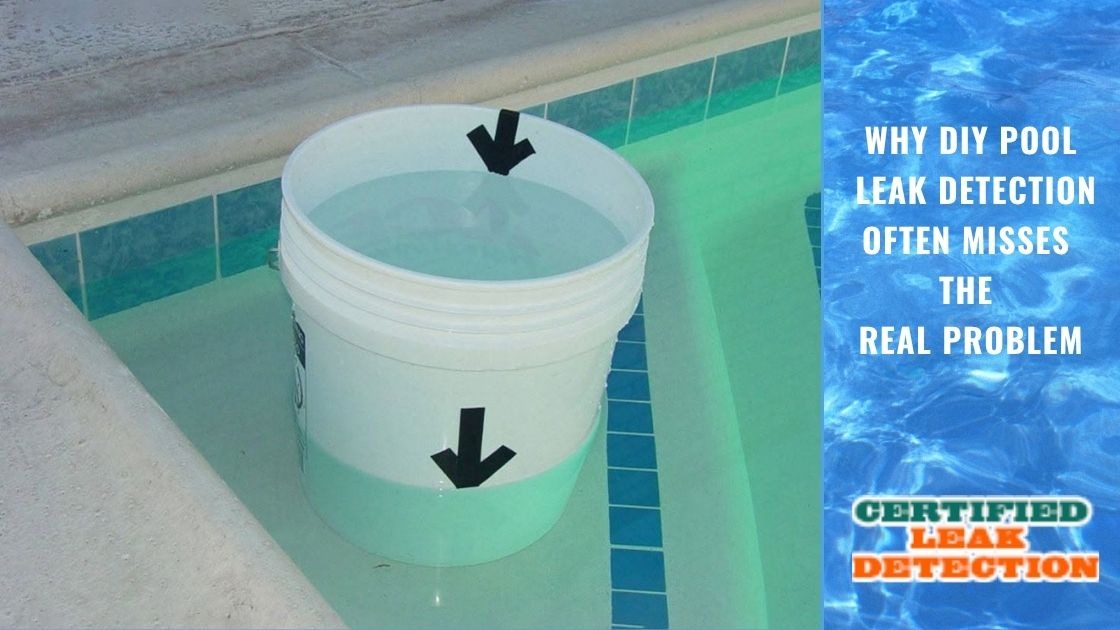
 Your swimming pool is your slice of Central Florida paradise. But if you think it may have a leak, trying to confirm that suspicion by using DIY methods is often the first resort. While such techniques can sometimes confirm that water loss is occurring, however, they typically fail to uncover the true source of the problem.
The reality is that pool leaks are frequently more complex than they appear. What seems like a small issue on the surface may actually involve underground plumbing, hidden structural damage, or multiple leak points.
Here’s why DIY pool leak detection often misses the real problem — and why professional detection can save time, money, and unnecessary repairs.
Not All Water Loss Is Easy to Diagnose
One of the biggest challenges in DIY leak detection is determining whether the pool is actually leaking at all. Pools naturally lose water due to:
- Evaporation
- Splash-out from swimming
- Backwashing
- Weather conditions
Because some water loss is normal, homeowners may either mistake normal evaporation for a leak, or dismiss an actual leak as “nothing serious.” This uncertainty often delays proper detection and diagnosis.
DIY Tests Only Confirm Water Loss — Not the Source
The bucket test — which is here on our website — is one of the most common DIY methods used to compare evaporation rates against pool water loss. While it can suggest that a leak exists, it cannot identify where the leak is located, how severe it is, or whether multiple leaks are present. A pool can lose water from several places, including:
- Underground plumbing
- Skimmers or returns
- Pool lights
- Main drains
- Structural cracks
- Vinyl liner punctures
- Equipment pads
Without specialized tools, finding the exact source becomes extremely difficult.
Many Pool Leaks Are Hidden Underground
Some of the most serious leaks occur in underground plumbing lines where there are no visible signs at all. DIY inspections typically focus on what can be seen — for example, water level changes, visible cracks, and wet areas around the pool. But underground leaks may silently erode soil beneath decking, landscaping, pool shells and foundations. By the time visible symptoms appear, significant damage may already exist. Our blog post — “How Pool Leaks Damage Decking, Landscaping and Foundations” — covers this topic in detail.
Small Leaks Can Be Extremely Difficult to Locate
Not all leaks are dramatic. Some lose only a small amount of water each day, making them nearly impossible to pinpoint without professional equipment. These tiny leaks may:
- Appear only when the pump is running
- Leak intermittently
- Occur inside fittings or underground joints
- Change behavior depending on pressure
Because the symptoms can be inconsistent, homeowners typically misidentify the source — or overlook the leak entirely. Our blog post — “Why Pool Leaks Often Go Undetected for Months” — covers this topic in detail.
Dye Testing Has Limitations
Many DIY guides recommend dye testing around suspected cracks or fittings. While this method can occasionally reveal a leak near the pool surface, it has important limitations.
Dye testing may fail when:
- Water movement disrupts the dye
- The leak is underground
- Multiple leaks exist
- The leak is extremely small
A negative dye test does not necessarily mean the pool is leak-free.
Incorrect DIY Repairs Can Make the Problem Worse
In some cases, homeowners attempt repairs before fully understanding the issue. Temporary patch kits or sealants may fail to address the true source of the leak and/or trap water behind surfaces, thereby allowing hidden damage to continue — which makes professional diagnosis more difficult later. What starts as a small repair can eventually lead to larger structural or plumbing problems.
When and Why You Should Call a Professional Leak Detection Company
If your DIY tests draw inconclusive results, or you continue to notice the following signs of a leak, it’s time to call a professional leak detection company:
- Frequent water loss
- Wet spots around the pool
- Air bubbles in return jets
- Cracked decking
- Constant refilling
- Equipment pressure issues
Professional leak detection companies use advanced tools designed to locate leaks accurately and efficiently, including:
- Electronic listening devices
- Pressure testing equipment
- Dye testing under controlled conditions
- Plumbing isolation methods
- Underwater inspection tools
These techniques help identify the precise location of the leak without unnecessary digging or demolition. Certified Leak Detection uses all of the above methods, as well as scuba diving to locate vinyl pool liner holes. You can read our entire list of leak detection methods — or as we call it, leakology — on our website.
Moreover, early detection saves money! Many homeowners delay professional leak detection in hopes that the problem is minor. Unfortunately, ongoing leaks can lead to:
- Higher water bills
- Increased chemical costs
- Pump and filtration strain
- Soil erosion
- Deck and foundation damage
In many cases, the cost of prolonged damage far exceeds the cost of early professional detection.
The Take-Home Message
DIY leak detection can be useful for identifying that a problem may exist — but it often stops short of finding the real cause. Because many pool leaks occur underground or in hard-to-access areas, accurate diagnosis usually requires professional expertise and specialized equipment. There’s no reason to delay. Call us! The sooner the true source of the leak is identified, the easier — and less expensive — it is to protect your pool, equipment, and property from further damage.
Certified Leak Detection uses technology and techniques we have developed over 20 years in business. In addition to quick detection of pool leaks, we provide industry-leading leak detection for spas and hot tubs, as well as slabs and foundations. Serving areas throughout Central Florida — including Orlando, Longwood, Lake Mary, Sanford, Kissimmee, Clermont and Winter Springs — our team is ready to answer your call. Contact us for quick, reliable service!