
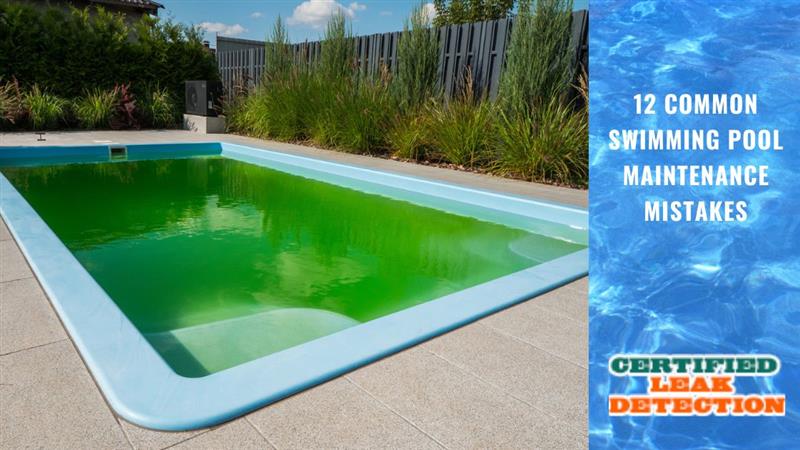
 Owning a swimming pool should be about relaxation — not constant frustration with cloudy water, algae outbreaks, or costly repairs. Unfortunately, many pool problems stem from a handful of common maintenance mistakes that are easy to overlook. Understanding these issues can help extend the life of your pool, protect your equipment and keep your water crystal clear year-round.
Are You Making These Pool Maintenance Mistakes?
- Not testing pool water often enough
One of the biggest mistakes pool owners make is assuming the water is fine because it looks clear. In reality, chemical imbalances can exist long before problems become visible. This can be a big problem in Central Florida thanks to our unique climate and weather pattern — particularly during summer. Intense sunlight, heat and heavy rainfall all affect pool water chemistry on a daily basis.
Unbalanced water can lead to algae growth, skin irritation, cloudy water and equipment corrosion. Testing your pool water at least 2–3 times per week during swim season —and weekly during cooler months — will ensure the water is as clean in fact as it is to the eyes! Use either a liquid test kit or test strips, and check pH, alkalinity, chlorine, calcium hardness, iron, copper and salt levels. Set a reminder so you do it consistently.
- Ignoring pH and alkalinity balance
Chlorine alone won’t keep your pool healthy if pH and alkalinity are out of balance.
- High pH reduces chlorine effectiveness.
- Low pH causes pool equipment corrosion and eye irritation.
- Poor alkalinity leads to rapid pH swings.
Maintaining proper balance allows chlorine to do its job efficiently.
- Adding chemicals incorrectly
Dumping chemicals directly into the skimmer or mixing incompatible chemicals can damage equipment and reduce effectiveness. Never put pool chemicals — particularly shock or chlorine tablets — directly into the skimmer. Doing so can cause highly concentrated, acidic water to damage your pump, filter, and heater, or cause an explosion with certain combinations.
Mistakes to avoid:
- Adding multiple chemicals at once.
- Pouring chemicals in the wrong order.
- Adding shock and algaecide together.
Most granular chemicals should be dissolved in a bucket of water first, then poured around the perimeter of the pool. For liquid chemicals, slowly pour directly in front of the return jet with the pump running. Using a floating dispenser or automatic chlorinator for tablets is the safest method to avoid damaging your equipment.
Always follow label instructions and space out chemical applications.
- Not running the pump long enough
Your pool pump is responsible for circulating water and distributing chemicals evenly. Running it too little can lead to stagnant water and algae growth. Run the pump long enough to turn over the entire pool volume daily — typically 8–12 hours, depending on pool size, temperature and system efficiency. Good circulation also ensures that the filter traps debris, contaminants and other particles.
- Backwashing too often (or not enough)
Backwashing cleans the media inside your filter, whether it’s sand or diatomaceous earth (D.E.). Pool water washes gunk out of your filter media, then exits through your filter’s backwash valve drain port. It is an important part of basic pool care, but overdoing it is one of the more common pool maintenance mistakes. Many pool owners think frequent backwashing keeps the pool cleaner, but this can actually reduce filtration efficiency. Backwash only when filter pressure rises 8–10 PSI above normal. However, not backwashing at all restricts flow and stresses the pump.
- Forgetting to brush the pool
Vacuuming alone won’t remove algae or calcium buildup that sticks to pool surfaces. High-risk areas include the following:
- Steps and corners.
- Ladders and handrails.
- Tile lines and behind lights.
Brushing weekly prevents buildup before it becomes a bigger problem.
- Not cleaning the skimmer and pump baskets
The purpose of the skimmer and pump basket is to prevent debris from entering the filter system. Clogged baskets reduce circulation and force your pump to work harder, increasing energy use and wear. Make sure to empty skimmer and pump baskets at least once a week — or more often during heavy debris seasons.
- Shocking at the wrong time
Shocking during daylight hours wastes chlorine due to UV exposure. Instead, shock your pool after sunset so chlorine has time to work overnight without breaking down. Our blog post — “The Shocking Truth About Shocking Your Pool” — covers this topic in detail.
- Skipping regular filter maintenance
Not cleaning your pool filter can cause your equipment to break down faster. The filter will clog with debris and other contaminants — and in turn increases the psi, which puts more pressure on the pump, causing it to become less effective. Each filter type has specific care requirements:
- Cartridge filters: Clean every few weeks.
- Sand filters: Replace sand every 3–5 years.
- DE filters: Recharge with fresh DE after backwashing.
Moreover, dirty filters are a leading cause of cloudy water.
- Relying on pool store tests without double-checking
Pool owners are typically advised against relying on pool store testing because it is frequently inaccurate, inconsistent and financially incentivized — leading to unnecessary chemical purchases and potential water damage. While convenient, these tests often rely on rushed, untrained staff and machines that are not properly calibrated, resulting in unreliable data that can lead to algae growth or, conversely, over-treatment.
Moreover, pool water chemistry can change daily due to rain, heat and swimmer use. For accurate, consistent pool care, invest in a high-quality home test kit. Such kits provide precise, repeatable results that allow for accurate, tailored adjustments rather than relying on inconsistent retail analyses.
- Not maintaining proper water level
Low water levels can pull air into the pump, while high water levels reduce skimmer effectiveness. The ideal level is midway up the skimmer opening for optimal circulation.
- Using the wrong algaecide, or overusing it
Algaecide is often misunderstood. It should be used as a preventative, not a replacement for chlorine. Using the wrong or excessive pool algaecide can cause cloudy, foamy water, severe skin/eye irritation, and — with copper-based products — permanent surface staining. Overuse can also lead to metal buildup, interfere with chlorine efficiency, and waste money, whereas using the wrong type (e.g., copper-based in high-metal water) may not fix the algae issue at all.
The Take-Home Message
It’s all too easy to fall into bad habits or pick up wrong information about pool maintenance. But knowledge is power! Now that you know what not to do, it will be easier for you to keep your pool in top condition and avoid problems! Our blog post — “Why Swimming Pool Maintenance is Important” — covers in detail the tasks to perform for optimum daily, weekly, monthly, seasonal and annual upkeep.
While Certified Leak Detection doesn’t perform swimming pool maintenance, we want you to get the most from your backyard oasis! We know that nothing spoils your enjoyment of your pool more than a leak. Certified Leak Detection uses technology and techniques we have developed over 20 years in business. In addition to quick detection of pool leaks, we provide industry-leading leak detection for spas, hot tubs and fountains. Serving areas throughout Central Florida — including Orlando, Longwood, Lake Mary, Sanford, Kissimmee, Clermont and Winter Springs — our team is ready to answer your call. Contact us for quick, reliable service!